Neev IIT Medical Foundation
parenting
Children’s Day 2025: Importance of Early Education & Strong Science–Math Foundation | NEEV IIT MEDICAL
Every year, Children’s Day reminds us of the limitless potential inside every young learner. At NEEV Academy, we celebrate this day not only with joy, but also with a renewed commitment to nurturing the early years of a child’s academic journey.
Because strong foundations built today create strong achievers tomorrow.
A child’s early learning years—Classes 1 to 5—are the most crucial stage of mental growth. These years shape how students understand the world, how they learn, and how confidently they move into higher grades. On this Children’s Day, NEEV Academy highlights the importance of early education, especially in building a solid base in Science and Mathematics, the pillars of STEM learning.
Why Early Education Matters: The NEEV IIT Medical Approach
Just as our name “NEEV” means foundation, we believe the first years of schooling create the academic structure that lasts a lifetime.
1. Early Learning Builds Better Thinking Skills
In the early years, children naturally ask questions, explore ideas, and observe everything around them. When guided correctly, this curiosity turns into strong analytical and problem-solving skills.
2. Faster Brain Development Means Faster Concept Grasping
Experts say nearly 85% of a child’s brain development happens before age 10.
This means early exposure to numbers, patterns, nature, and logical thinking sets the stage for lifelong learning.
3. Early Success Builds Confidence
Children who understand concepts early—especially in Science and Maths—grow up with higher confidence, better classroom participation, and reduced exam fear.
At NEEV Academy, we ensure students build these skills through structured teaching, concept clarity, visual learning, and regular assessments like the NEEV Accelerate Talent Reward Exam.
🔬 Why Science & Maths Foundations Are Key for Future Success
Science and Mathematics are more than school subjects—they are the building blocks of modern learning.
Science Builds Curiosity
Early exposure to Science helps children:
✔ Understand the natural world
✔ Observe and experiment
✔ Think logically
✔ Connect everyday life with concepts
Topics like plants, animals, energy, environment, water, and health deepen awareness and grow scientific thinking.
Mathematics Builds Logic
Early maths concepts—place value, operations, fractions, measurement, shapes—develop:
✔ Critical thinking
✔ Pattern recognition
✔ Numerical fluency
✔ Problem-solving skills
These skills later help students excel in higher classes and competitive exams like Olympiads, NTSE, JEE, and NEET.
How NEEV Academy Strengthens Early Foundations
At NEEV Academy, our goal is not just to teach subjects but to shape strong learners.
We do this through:
- Concept-based teaching
- Regular practice worksheets
- Logical and reasoning activities
- Early introduction to STEM thinking
- Skill-based assessments
- The NEEV Accelerate Exam that identifies talent early
This early foundation ensures students transition smoothly into advanced topics in middle and high school.
Children’s Day Message from NEEV
Every child is full of possibilities.
Every child deserves strong guidance.
Every child deserves the right NEEV (foundation).
On this Children’s Day, we reaffirm our mission:
✨ To nurture curiosity
✨ To strengthen Science & Maths foundations
✨ To build disciplined, confident learners
✨ To prepare children for future challenges and achievements
At NEEV Academy, we are proud to support young minds as they grow into tomorrow’s achievers—future engineers, doctors, researchers, innovators, and leaders.
Conclusion
Children’s Day is not just a celebration—it’s a reminder of our responsibility to invest in children’s futures.
Early education, supported by strong Science and Mathematics foundations, creates learners who are confident, capable, and future-ready.
This Children’s Day, let’s pledge to continue building strong foundations that empower children to rise, shine, and succeed.
Know More – 9960444976
Share this:

Why Foundation Courses in Class 6–10 Are Crucial for NEET/JEE Success
When it comes to preparing for NEET and JEE, parents often wonder: When should my child start? While many students begin in Class 11, the truth is that a strong foundation built in Classes 6–10 can be the game-changer that sets your child apart. Let’s understand why.
1. A Head Start in the Competition
Foundation courses give children early exposure to the style of questions, logical reasoning, and competitive exam mindset. This reduces the shock when they enter Class 11, making the journey smoother and less stressful.
2. Strong Basics = Strong Future
Every parent knows the importance of basics. NEET and JEE test conceptual understanding—not rote learning. Foundation programs help children master key concepts in Math and Science early so they don’t struggle later.
Example: A child confident with algebra in Class 9 will find advanced JEE-level mathematics far less intimidating.
3. Stress-Free Transition to Higher Classes
The leap from Class 10 to 11 can overwhelm students. Foundation training ensures your child already understands the basics, so they can focus on advanced topics without fear.
4. Better Discipline, Better Habits
Foundation courses encourage regular practice, time management, and doubt-solving habits. These skills aren’t just for exams—they shape your child into a consistent learner with strong study discipline.
5. Boost in School Exams Too
Worried that competitive preparation may affect school results? In fact, the opposite happens! Since the curriculum is aligned, foundation training often leads to higher marks in school and Olympiads.
6. Identifying Strengths & Weaknesses Early
Foundation courses help parents and students identify which subjects need more focus—long before board or entrance exams. This early insight allows for personalized learning strategies and targeted improvement.
7. Confidence in Olympiads & NTSE
Apart from NEET and JEE, foundation programs prepare children for Olympiads and NMTC. These achievements build confidence and strengthen problem-solving skills.
8. Reduced Pressure, Increased Confidence
Instead of cramming in Class 11 and 12, your child enters with a solid base and confidence, turning pressure into performance.
Final Message to Parents
Investing in foundation courses during Classes 6 –10 is not about pushing children too early—it’s about easing their future journey. By building strong fundamentals today, you give your child the gift of confidence, discipline, and a clear edge in the toughest exams tomorrow.
✅ Foundation today = Success tomorrow.
📢 Call to Action
If you want to give your child the right start towards NEET/JEE success:
- 📞 Call us today to know more about our foundation programs.
- 📝 Enroll now and secure your child’s future with strong fundamentals.
👉 Don’t wait until Class 11—start early, stay stress-free, and aim for the top ranks!
Share this:
Monitoring Your Child’s Online Activities.
The internet has so much to offer to our kids. Due to its extreme resourcefulness, it is a great platform to help our children learn. However, if not utilized well, it can cause major problems in their life as well as yours as a parent. It is imperative that you have some control of whatever they are doing online. Check out some tips to do the same ..
Establish Rules
Before allowing your child to use the devices and the internet, establish some rules around the use of the same and make sure they understand. Let them know in a clear way, what they should or should not do. Have the consequences for breaking the rules in place too. Such rules can be setting time for internet use or no passwords on their devices.
Educate. Educate. Educate.
Educate your children what online security entails. Teach them how to keep themselves safe on the internet. Let them know the dangers of using the internet inappropriately or visit certain unnecessary websites.
Parental Control
You can use parental control software to control what your child is viewing on the internet. You can restrict them from visiting certain websites. Your child will not be able to access harmful content such as violence or other extraordinary conetent.
Talk To Them
Rules and monitoring can only go so far. Make sure you are listening to your children and talking to them. They may encounter videos, memes, photos, and other content online that can be disturbing and confusing. Be open about topics that may come up and assure your children you are there for them.
Seek Help When Necessary. Happy Parenting !

Share this:

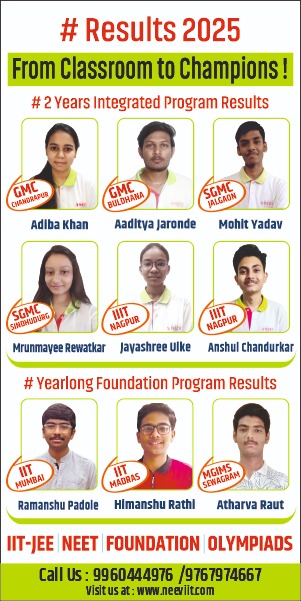
#Results 2025
Ad,issions Open

Neev Accelerate Talent Reward Exam 2026

JEE(Mains +Advance) Test Series 2026



 Neev IIT Medical Foundation