Neev IIT Medical Foundation
#NSE2025 #OlympiadPrep #NSEP #NSEC #NSEB #NSEA #NSEJS #NeevIIT #NEET #JEE #Foundation
Learn how to ace the National Standard Examinations (NSEs) — NSEP, NSEC, NSEB, NSEA & NSEJS — with data-backed strategy, preparation tips, and analysis from past years. (Class 9 to 12)
What Are the NSE Exams?
The National Standard Examinations (NSEs) are India’s most recognized science and Olympiad gateway exams.
Organized by the Indian Association of Physics Teachers (IAPT), these tests select students for higher rounds like the Indian National Olympiads (INOs) — leading eventually to international Olympiads in Physics, Chemistry, Biology, Astronomy, and Junior Science.
Every year, lakhs of students from CBSE, ICSE, and State Boards appear for NSEs, but only the top few thousand qualify for the next level. The key to success isn’t just hard work — it’s smart, data-driven preparation.
What Historical Data Tells Us
A careful analysis of the last few NSE papers reveals strong patterns that toppers consistently use to their advantage:
| Observation | Trend (Past 5 Years) |
|---|---|
| Average Cut-off | 50–55% of total marks |
| Top 10% Score Range | 60–65% |
| Repeated Core Concepts | ~70% from NCERT & standard textbooks |
| New / Analytical Questions | ~30% (application-based) |
| Common Error Pattern | Time mismanagement and skipped reasoning- |
Key insight: Students who focused on conceptual accuracy and timed mock practice were 2x more likely to clear the INO stage.
🎯 Winning Strategy to Ace NSE Exams
1 Master the NCERT Core
Around 70% of NSE questions come directly or indirectly from Class 9–12 NCERT topics.
So before diving into extra reference books, ensure conceptual clarity in:
- Physics: Motion, Laws, Electricity, and Thermodynamics
- Chemistry: Atomic structure, Mole concept, Thermodynamics
- Biology: Cell, Genetics, Human Physiology
💡 Tip: Revise NCERT diagrams — several direct concept questions come from them!
2 Solve Past Papers Religiously
Historical data shows that students who solved at least 5 previous year papers scored 8–10% higher on average.
Use a timer and simulate real exam conditions.
After every test, maintain an Error Log Book to note where you lost marks — concept, calculation, or misreading.
3 Work on Speed + Accuracy
Top performers finish 80–90% of the paper in 90 minutes, leaving time for review.
Set a pace goal: ~1.4 minutes per question on a 70-mark paper.
Consistency in timed tests improves both accuracy and confidence.
4 Focus on the 30% Application Questions
While fundamentals make the base, the final selection depends on problem-solving.
Practice advanced conceptual problems from:
- IAPT Booklets / NSE Archive PDFs
- HBCSE past INO papers
- Conceptual Physics by H.C. Verma (for NSEP)
- Campbell & Reece (for NSEB)
5 Subject-Wise Focus (Based on Data)
NSEP (Physics): Numerical-heavy (~45%), reasoning-based (~25%)
NSEC (Chemistry): Organic & Physical carry ~50% weight combined
NSEB (Biology): Conceptual + reasoning (diagrams, mechanisms)
NSEA (Astronomy): Coordinate systems, optics, space mechanics
NSEJS (Junior Science): Balanced mix of Physics, Chemistry, and Bio
Daily Routine Followed by NSE Toppers
- Morning (1 hr): Concept revision
- Afternoon (45 min): Timed practice (15–20 questions)
- Evening (30 min): Review mistakes & note tricky concepts
- Weekend (2 hrs): Full-length mock + analysis
“Smart study + consistency beats late-night panic revision — every single time.” 💪
🏆 Final Word from NeevIIT Medical
📖 Remember: NSE exams don’t test memory — they test understanding, clarity, and perseverance.
With focused practice, you don’t just pass — you stand out. 🌟
Connect with Us
For guidance for Olympiad exams, reach us at:
📍 NeevIIT Medical Institute
📞 9960444976 | 🌐 http://www.neeviit.com | ✉️ neevfd@gmail.com
Share this:

#Results 2025
Ad,issions Open

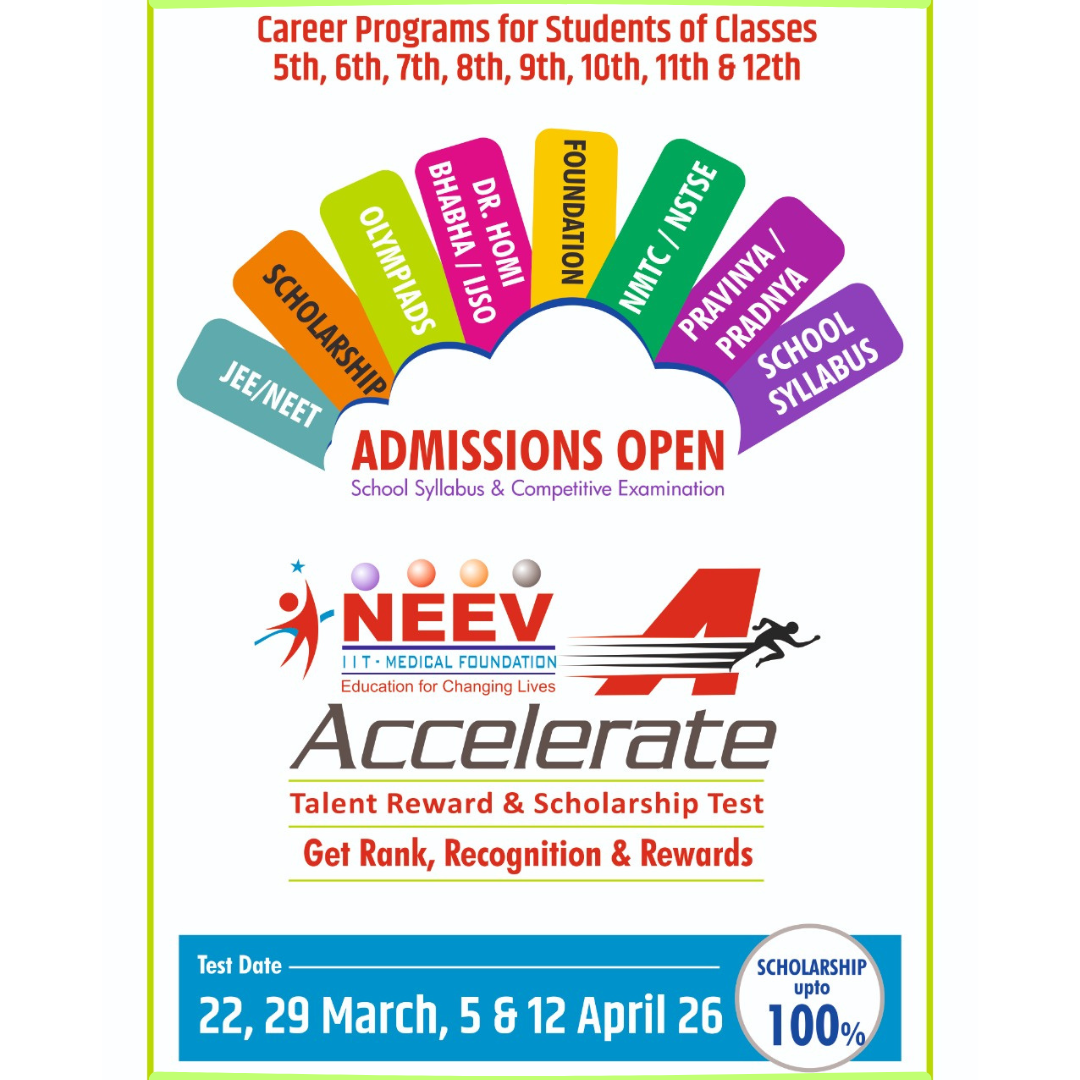
Neev Accelerate Talent Reward Exam 2026
Accellerate Talent Reward Exam’26


 Neev IIT Medical Foundation