Neev IIT Medical Foundation
Critical Thinking
Children’s Day: Raising Curious Minds in a Digital World – 14 November | NEEV IIT–Medical Foundation, Wardha
A child asks, “Why does the Moon seem to follow us?” A phone can provide the answer in seconds. But there’s another way to begin: “What do you notice when we pass a nearby tree? Does the Moon move past us in the same way?”
That extra minute of observation is where education begins. This Children’s Day, let’s celebrate not just what children know, but their confidence to ask questions, make mistakes and change their minds.
Growing up with Answers Everywhere
Today’s children can watch a science experiment, explore a new language or learn a maths concept from a great teacher without leaving home. But the same screen that opens a lesson can interrupt it with notifications, short videos and a steady stream of comparisons. And with AI, a convincing answer is often easier to find than a reliable one.
The goal isn’t to keep children away from technology. It’s to help them use it without handing over their thinking. A simple habit can help: try first, look it up second, then explain it in your own words. If a child can explain why an answer makes sense—or show where it might be wrong—they’re doing more than copying it.
Why Science and Maths Foundations Matter Early
A child who understands why one-half and two-quarters are equal is already learning to recognise the same idea in different forms. A child who grows two seedlings under different light conditions and keeps the amount of water the same is learning how to test an idea fairly. These small experiences build habits that matter long after the chapter ends.
A strong foundation is not about starting the Class XI syllabus in Class VI. It’s about giving children time to understand numbers, read graphs, spot patterns and explain what they observe. Those skills make school lessons easier to build on and give students a stronger base if they later choose Olympiads, JEE, NEET or MHT-CET.
At home, the best starting point may be a recipe, a shopping bill or a shadow in the courtyard. Ask your child to estimate, measure or predict something. Then listen to how they worked it out. “How did you think about it?” often tells you more than “Did you get it right?”
To every young learner: Keep asking the question you think everyone else already understands. Someone else in the room is probably wondering the same thing.
Happy Children’s Day! Stay Curious. Keep Learning.
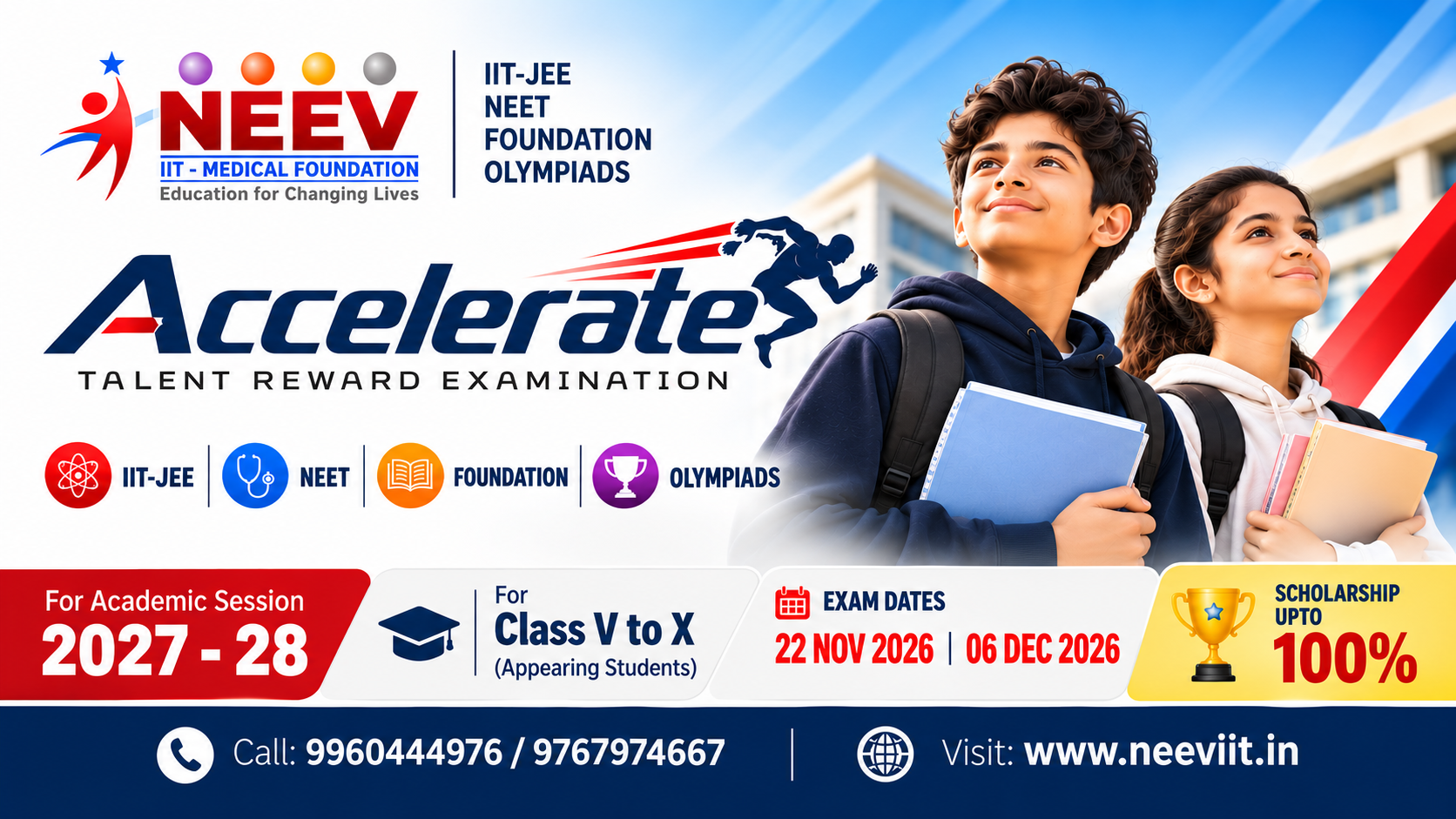
Register for the NEEV Accelerate Talent Reward Exam
For students currently studying in Classes V–X, NEEV Accelerate is an opportunity to try a timed, objective paper, put their understanding to the test and be considered for a performance-based scholarship for the 2027–28 academic session, subject to NEEV’s scholarship criteria.
Exam dates: Sunday, 22 November 2026 and Sunday, 6 December 2026
Venue: NEEV IIT–Medical Foundation, Sai Nagar Square, Wardha
Register online for NEEV Accelerate
Share this:

#20 Years of Neev
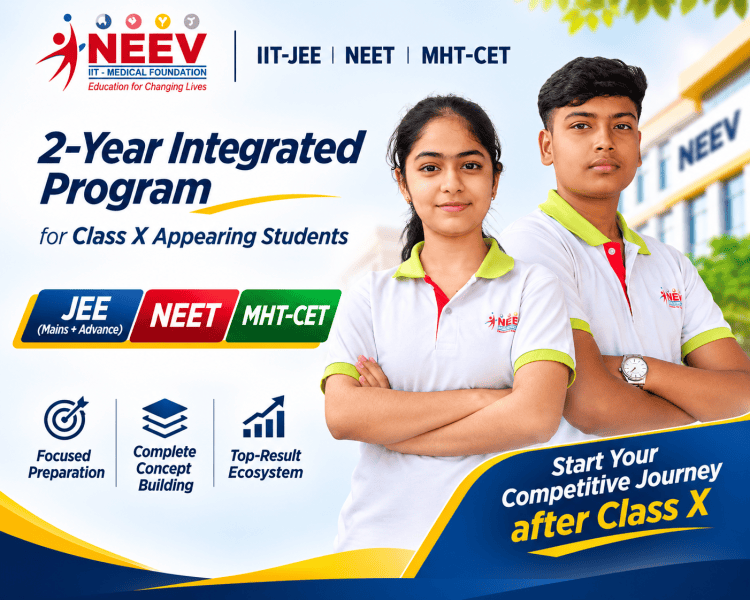
Admission Open – Batch 2027-29 – For Class X Appearing Students
Neev Accelerate Talent Reward Exam 2026
JEE NEET Test Series 2027