Neev IIT Medical Foundation
ai
HSC & CBSE Board Exams Are About to Begin: A Calm, Smart Approach for Class 10 & Class 12 Students
The HSC and CBSE Board Examinations for Class 10 and Class 12 are about to begin. This is a crucial phase, especially for Class 12 students, as these exams play an important role in college admissions, competitive exams, and future academic plans.
It is natural to feel pressure — but with the right mindset and strategy, this period can be handled confidently.
1. For Class 12 Students: Boards Matter, But Calm Matters More
Class 12 board exams demand:
- Strong conceptual understanding
- Clear step-wise answers
- Proper presentation and time management
Remember:
👉 Boards test how well you express what you know, not how stressed you are.
If your basics are clear, consistent revision is enough at this stage.
2. What Students Should Focus on Right Now (Class 10 & 12)
✔ Smart Revision, Not New Learning
This is not the time to start entirely new topics. Focus on:
- NCERT textbook questions
- Important formulas and derivations (especially for Class 12)
- Definitions, diagrams, and numericals
- Previous years’ board questions
✔ Answer Writing Practice (Very Important for Class 12)
Marks are often lost due to poor presentation, not lack of knowledge.
- Write answers in points
- Show all steps in numericals
- Highlight final answers
- Use proper headings and diagrams
3. Common Mistakes to Avoid in the Last Days
❌ Studying till late night every day
❌ Overloading the brain with too many mock papers
❌ Comparing performance with friends
❌ Ignoring food, sleep, and breaks
👉 A fresh, well-rested mind performs better than an exhausted one.
4. Exam-Day Strategy (Especially for Class 12)
- Reach the exam centre early
- Read the question paper carefully
- Attempt known questions first
- Manage time section-wise
- Keep last 10–15 minutes for revision
Neat presentation + correct concepts = maximum marks.
5. A Special Note for Parents of Class 12 Students
Parents, your support is crucial right now.
Please:
- Avoid unnecessary pressure about results
- Encourage effort and consistency
- Ensure proper sleep and meals
- Stay calm — anxiety spreads quickly at home
A supportive environment helps students perform to their true potential.
6. Remember: Boards Are Important, But Not Everything
For Class 12 students, board exams are a major milestone, but not the end of the journey. Competitive exams, college life, and careers are long paths.
What truly matters is:
- Discipline
- Confidence
- The habit of learning
Final Words
As HSC and CBSE Class 10 & Class 12 board exams begin:
Stay calm, trust your preparation, and focus on giving your best.
We wish all students — especially our Class 12 board aspirants — the very best for their exams.
🏫 Neev IIT–Medical Foundation
📕📗📘📙 Learn • Practice • Excel
Share this:

Is JEE Advanced Moving Towards Adaptive Testing ?
What It Means, Its Pros & Cons, and How Students, Parents, and Coaching Must Respond
JEE Advanced has always evolved to stay ahead of rote learning and pattern-based preparation. Recent trends suggest that the examination is exploring adaptive-style assessment principles—not as an immediate implementation, but as a possible future direction.
⚠️ Important clarification upfront
JEE Advanced 2026 is NOT an adaptive test.
The 2026 examination will be conducted in the existing format.
However, the performance data and response patterns of the 2026 batch are expected to serve as a reference sample, based on which future examination strategies may be evaluated.
Understanding this distinction is essential for students and parents.
🔍 What Is Adaptive Testing?
Adaptive testing refers to an assessment philosophy where:
- The exam focuses on depth of understanding, not repetition
- Questions are layered from basic concepts to advanced applications
- Partial knowledge is exposed and penalised
- Accuracy, judgement, and composure matter as much as knowledge
⚠️ Clarification again
Adaptive testing here refers to exam design philosophy, not a computer-controlled question-by-question adaptive system like CAT.
🧪 Role of the JEE Advanced 2026 Batch (Sample / Reference Group)
Educational analysts believe that:
- The JEE Advanced 2026 batch will act as a reference or sample group
- Their performance data will help exam authorities study:
- How students respond to higher conceptual depth
- Accuracy vs attempt behaviour
- Time management and decision-making patterns
- Based on this statistical and behavioural analysis, authorities may:
- Decide whether adaptive elements should be introduced
- Determine the extent and manner of any future changes
In simple words:
2026 is a data-gathering and evaluation phase, not an implementation phase.
Any structural change, if approved, would be introduced only in later years, after careful analysis.
🔁 How This Differs from Conventional JEE Advanced
Conventional Approach
- More predictable structure
- Familiar question types
- Advantage to repeated practice
- Speed and volume of attempts mattered more
Direction Being Evaluated
- Reduced dependence on fixed patterns
- Greater emphasis on concept integration
- Accuracy over number of attempts
- Stronger testing of exam temperament
This shift aims to assess quality of thinking, not quantity of practice.
✅ Pros of an Adaptive-Style Approach (If Implemented in the Future)
1️⃣ Rewards True Conceptual Understanding
Students who understand concepts deeply benefit more than those relying on memorisation.
2️⃣ Reduces Guesswork and Luck
Multiple-correct and numerical-type questions discourage blind attempts.
3️⃣ Better Rank Differentiation
Adaptive-style assessment separates students more meaningfully, especially at the top.
4️⃣ Aligns with IIT Academic Demands
The focus moves closer to:
- Problem-solving
- Logical reasoning
- Handling unfamiliar situations
⚠️ Challenges and Concerns
1️⃣ Psychological Pressure
Unpredictability can increase anxiety if students are not mentally prepared.
2️⃣ Time and Risk Management
Students must decide not only how to solve, but whether to attempt.
3️⃣ Partial Preparation Gets Exposed
Surface-level learning becomes ineffective.
🎓 Role of Students
Students should:
- Build strong fundamentals
- Practise mixed-concept questions
- Learn intelligent question selection
- Develop calmness under uncertainty
In such exams:
Attempt quality matters more than attempt quantity.
👨👩👧 Role of Parents
Parents should:
- Understand that rank fluctuations are natural, especially during transition years
- Avoid judging ability based on a single test
- Focus on consistency, not instant results
- Provide emotional stability at home
A calm parent environment supports better exam performance.
🏫 Is This Making JEE Advanced More Coaching-Dependent?
No — if anything, it reduces coaching dependency.
- Pattern-based shortcuts lose effectiveness
- Conceptual clarity and independent thinking gain importance
- Expensive material alone offers no advantage
Good coaching helps guide thinking, but cannot replace understanding.
🌾 Impact on Rural and Resource-Limited Students
Potential Positives
- Reduced advantage of pattern-heavy coaching
- Greater importance of NCERT-based fundamentals
- Less reward for rote memorisation
Real Challenges
- Limited access to mentors and adaptive-style practice
- Digital and resource gaps
With proper guidance and access, adaptive assessment can be more inclusive, not less.
🧠 Final Perspective
To summarise clearly:
- JEE Advanced 2026 will NOT be adaptive
- The 2026 batch serves as a reference sample
- Any adaptive-style implementation, if approved, would be introduced only in future years
- The goal is to identify genuine conceptual thinkers, not pattern-trained candidates
Students, parents, and coaching institutes who understand this evolution early will be better prepared, not anxious. Know More 9960444976
🏫 Our Response at Neev IIT Foundation
Understanding the evolving nature of JEE Advanced and the possible future move towards adaptive-style assessment, Neev IIT Foundation has proactively strengthened its academic ecosystem.
As part of this effort, several IITians and Medicos have been added to the Neev academic team, bringing with them:
- Deep conceptual teaching experience
- First-hand understanding of IIT and medical entrance expectations
- Strong focus on problem-solving, accuracy, and exam temperament
- Mentorship that goes beyond syllabus completion
Their role is not just to teach, but to train students to think, adapt, and stay composed—skills that are increasingly crucial in JEE Advanced.
Our objective is clear:
To prepare students not just for an exam pattern, but for any evolution the exam may undergo.
With strong fundamentals, guided mentorship, and emotional balance, students can face both present and future challenges of JEE Advanced with confidence.
Share this:
How AI Can Transform Student Learning | Benefits of Using AI the Right Way
Artificial Intelligence (AI) is no longer just a futuristic concept—it’s now a daily companion for millions of students. Whether it’s solving doubts instantly, summarizing long chapters, or helping with competitive exam practice, AI is transforming how students learn.
But like any tool, its impact depends on how students use it. Used wisely, AI can boost learning. Misused, it can weaken thinking skills.
Here’s how AI becomes a powerful partner for students—when used in the right way.
1. Instant Doubt Solving
Students often get stuck on small doubts that slow down their study flow.
AI can:
- Explain tough concepts instantly
- Provide step-by-step solutions
- Offer simple examples for better clarity
This keeps their momentum going without having to wait for teachers or tuition classes.
2. Better Revision With Summaries & Notes
AI tools can quickly generate:
- Chapter summaries
- Mind maps
- Flashcards
- Important points for last-minute revision
This saves time and helps students focus on retention instead of re-reading the entire syllabus.
3. Personalized Practice & Tests
Every student learns at a different pace.
AI can:
- Create personalized tests
- Identify weak areas
- Suggest practice questions
- Track progress
This makes exam preparation (like JEE, NEET, Boards, Olympiads) more targeted and efficient.
4. Boosts Creativity & Projects
Whether it’s designing a presentation, writing a poem, creating an experiment idea, or building a model, AI encourages creativity.
It gives inspiration—not ready-made answers—when used smartly.
5. Improves Productivity
AI helps students manage time and stay organized:
- Timetable creation
- Study plan generation
- To-do lists
- Reminders for deadlines
With better planning, students reduce stress and improve consistency.
6. Helps with Languages & Communication
AI tools can assist in:
- Grammar correction
- Vocabulary building
- Sentence improvement
- Translation
Great for essays, letters, speeches, and everyday communication skills.
7. Promotes Independent Learning
Instead of waiting for someone to explain, students can explore topics on their own.
This makes them:
- More confident
- More curious
- Better self-learners
Self-learning is a must for higher studies and competitive exams.
But Students Must Use AI Responsibly
AI is a powerful tool—but it should support learning, not replace it.
Students must avoid:
❌ Copy-pasting homework
❌ Becoming dependent on AI for every answer
❌ Using AI during tests or exams
❌ Using AI-generated content without understanding it
The right approach is:
✔ Use AI to learn
✔ Use AI to practice
✔ Use AI to improve
✔ Use AI to save time—but think independently
Conclusion
AI is like electricity for today’s education—powerful, universal, and transformative.
When used with discipline, curiosity, and honesty, AI becomes a super mentor, helping students learn smarter, faster, and more creatively.
Students who learn to use AI wisely today will have a huge advantage in the future.
⭐ Neev IIT & Medical Foundation – Building Strong Futures
AI becomes even more powerful when combined with disciplined learning and expert guidance.
Neev IIT & Medical Foundation helps students from Classes V to XII build a strong academic base through:
- Personalised mentoring
- Disciplined study routines
- JEE & NEET Foundation Programs
- Regular tests and analysis
- Doubt-solving sessions
- Concept-based learning
At Neev, students develop clarity, confidence, and exam-readiness for IIT-JEE, NEET, NTSE, Olympiads, and Board exams.
AI + Strong Foundation + Expert Mentoring = Successful Student
📍 Neev IIT & Medical Foundation – Contact Details
📞 Phone:
9767974667, 9960444976
🌐 Website:
http://www.neeviit.com
📍 Address:
Neev IIT & Medical Foundation,
Sai Nagar Square , Wardha (Maharashtra) – 442001
Share this:
Learn how to ace the National Standard Examinations (NSEs) — NSEP, NSEC, NSEB, NSEA & NSEJS — with data-backed strategy, preparation tips, and analysis from past years. (Class 9 to 12)
What Are the NSE Exams?
The National Standard Examinations (NSEs) are India’s most recognized science and Olympiad gateway exams.
Organized by the Indian Association of Physics Teachers (IAPT), these tests select students for higher rounds like the Indian National Olympiads (INOs) — leading eventually to international Olympiads in Physics, Chemistry, Biology, Astronomy, and Junior Science.
Every year, lakhs of students from CBSE, ICSE, and State Boards appear for NSEs, but only the top few thousand qualify for the next level. The key to success isn’t just hard work — it’s smart, data-driven preparation.
What Historical Data Tells Us
A careful analysis of the last few NSE papers reveals strong patterns that toppers consistently use to their advantage:
| Observation | Trend (Past 5 Years) |
|---|---|
| Average Cut-off | 50–55% of total marks |
| Top 10% Score Range | 60–65% |
| Repeated Core Concepts | ~70% from NCERT & standard textbooks |
| New / Analytical Questions | ~30% (application-based) |
| Common Error Pattern | Time mismanagement and skipped reasoning- |
Key insight: Students who focused on conceptual accuracy and timed mock practice were 2x more likely to clear the INO stage.
🎯 Winning Strategy to Ace NSE Exams
1 Master the NCERT Core
Around 70% of NSE questions come directly or indirectly from Class 9–12 NCERT topics.
So before diving into extra reference books, ensure conceptual clarity in:
- Physics: Motion, Laws, Electricity, and Thermodynamics
- Chemistry: Atomic structure, Mole concept, Thermodynamics
- Biology: Cell, Genetics, Human Physiology
💡 Tip: Revise NCERT diagrams — several direct concept questions come from them!
2 Solve Past Papers Religiously
Historical data shows that students who solved at least 5 previous year papers scored 8–10% higher on average.
Use a timer and simulate real exam conditions.
After every test, maintain an Error Log Book to note where you lost marks — concept, calculation, or misreading.
3 Work on Speed + Accuracy
Top performers finish 80–90% of the paper in 90 minutes, leaving time for review.
Set a pace goal: ~1.4 minutes per question on a 70-mark paper.
Consistency in timed tests improves both accuracy and confidence.
4 Focus on the 30% Application Questions
While fundamentals make the base, the final selection depends on problem-solving.
Practice advanced conceptual problems from:
- IAPT Booklets / NSE Archive PDFs
- HBCSE past INO papers
- Conceptual Physics by H.C. Verma (for NSEP)
- Campbell & Reece (for NSEB)
5 Subject-Wise Focus (Based on Data)
NSEP (Physics): Numerical-heavy (~45%), reasoning-based (~25%)
NSEC (Chemistry): Organic & Physical carry ~50% weight combined
NSEB (Biology): Conceptual + reasoning (diagrams, mechanisms)
NSEA (Astronomy): Coordinate systems, optics, space mechanics
NSEJS (Junior Science): Balanced mix of Physics, Chemistry, and Bio
Daily Routine Followed by NSE Toppers
- Morning (1 hr): Concept revision
- Afternoon (45 min): Timed practice (15–20 questions)
- Evening (30 min): Review mistakes & note tricky concepts
- Weekend (2 hrs): Full-length mock + analysis
“Smart study + consistency beats late-night panic revision — every single time.” 💪
🏆 Final Word from NeevIIT Medical
📖 Remember: NSE exams don’t test memory — they test understanding, clarity, and perseverance.
With focused practice, you don’t just pass — you stand out. 🌟
Connect with Us
For guidance for Olympiad exams, reach us at:
📍 NeevIIT Medical Institute
📞 9960444976 | 🌐 http://www.neeviit.com | ✉️ neevfd@gmail.com
Share this:
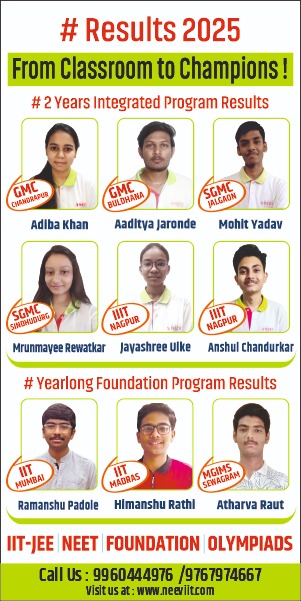
#Results 2025
Ad,issions Open

Neev Accelerate Talent Reward Exam 2026

JEE(Mains +Advance) Test Series 2026


 Neev IIT Medical Foundation